Output
Arcade: Standalone to DAW Initiative
TLDR: I designed an in-product modal experience & email campaign in order to educate users about the benefits of opening our plugin in its intended environment.
My involvement
As the sole product designer on this project, I was responsible for all deliverables. I facilitated workshops to gain consensus on direction en-route to all relevant deliverables.
I used components from Arcade's design system to create some screens in this experience, designing new components in several areas that were not yet accommodated by the design system.
A case of mistaken identity
While playable as a standalone application, Arcade is ultimately a plugin. It cannot fulfill its core value proposition as a creation accelerator without the assistance of a DAW (Digital Audio Workstation, like Logic, Garageband, or Ableton Live).
Until this point, there had been no attempts at Output to educate users about plugins at a user's peak engagement period in the product (i.e. first 30 days). We also spoke to a large number of users in exploratory research with misconceptions about Arcade.
These users expected Arcade to have functionality like recording, or arranging clips on a timeline. These are features they'd only experience if Arcade was opened as a plugin within a DAW, and so it was crucial to provide them guidance at these pivotal moments. Ultimately, users who opened solely in standalone mode were strongly associated with churn.
Process & Experience
We began ambitiously, mapping out a concept that would provide users with "starter" files for any DAW installed on their device, or providing information about several popular DAWs if none were found.
This approach had the advantage of giving us a high degree of control over what would otherwise be a risky moment -- directing users away from our product. With starter files, the chosen DAW (and an instance of Arcade) would be opened immediately. Users would also be able to play back a sonic experience designed by our Content team, perhaps providing inspiration.
Unfortunately, the "Starter file" approach had to be curtailed. Requesting full file-system access at first launch was deemed to be too high-risk.
The mid-ground approach was to offer some information about a range of DAWs, as well as a starter file for each.
This approach was also deemed too ambitious; we wanted to avoid relying heavily on other teams to achieve this objective.
The final, MVP initiative was two-pronged:
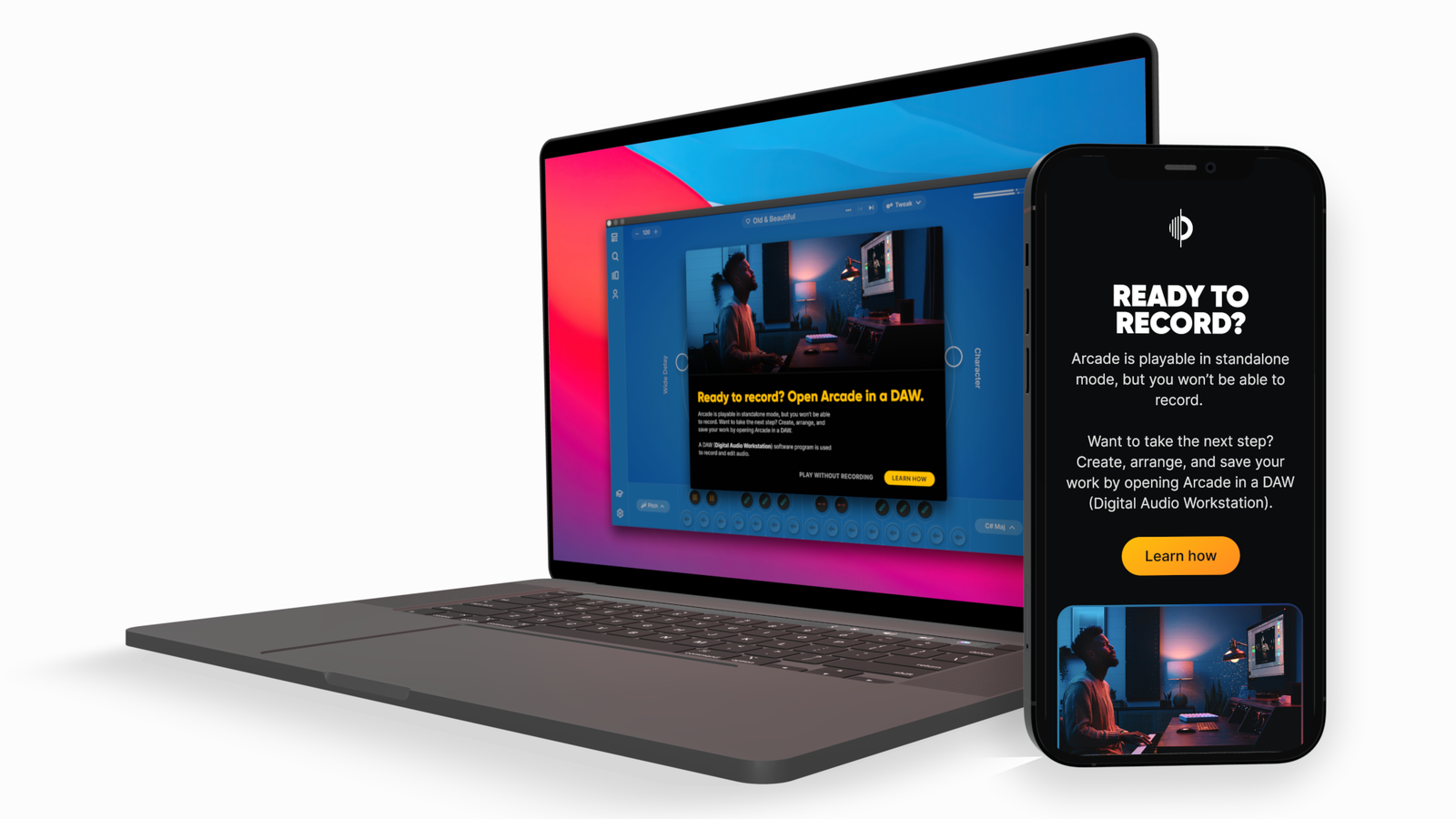
1. A modal experience, designed to appear on users' second (and subsequent) launch.
2. A companion email, to be part of the trial/welcome lifecycle flow.
In the spirit of transparency, I'm doing something a little different here.
Check out this Figma file where I've included the explorations for this project, as well as the final comps. Snoopers, rejoice!
Outcome / Impact
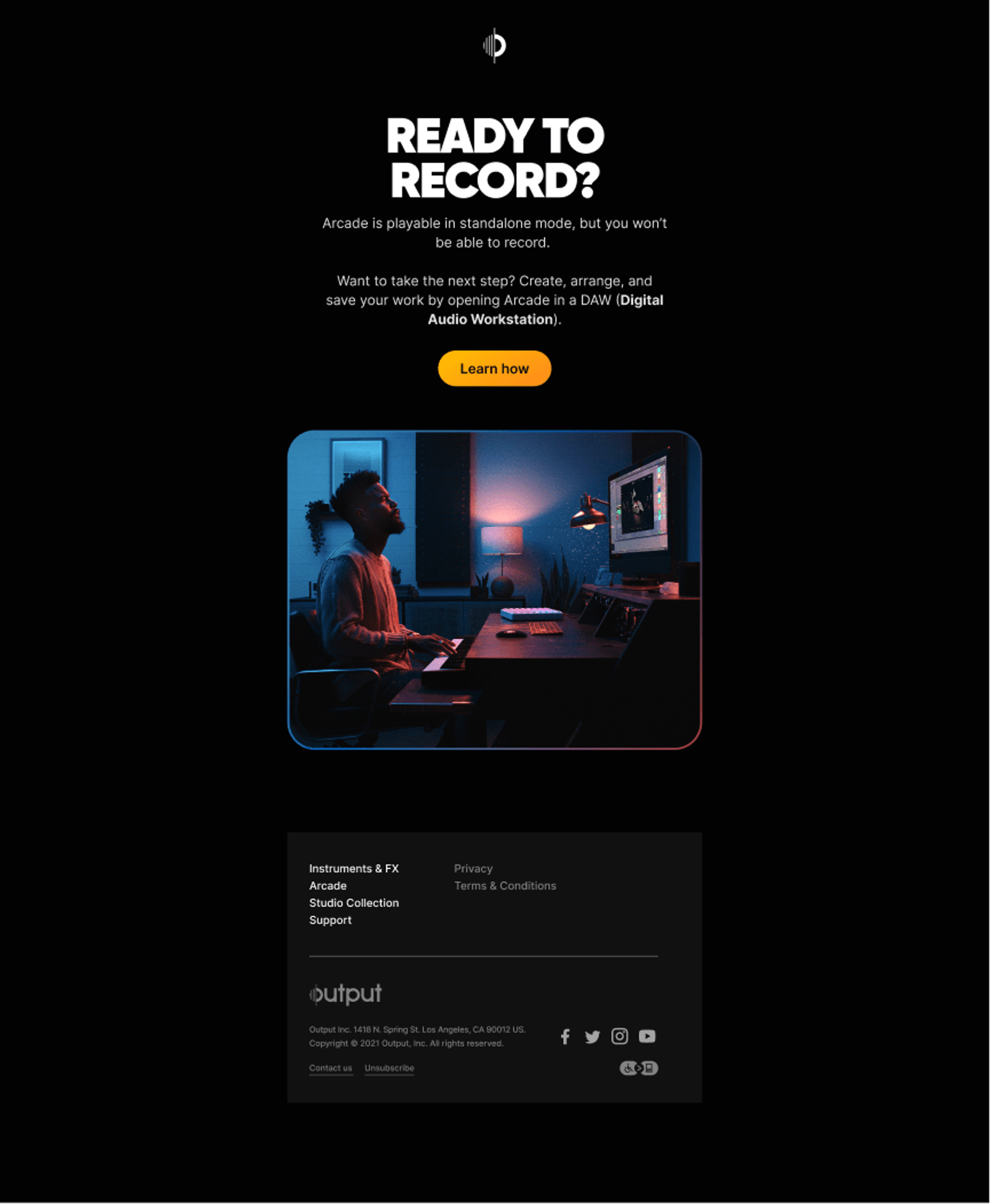
The companion email part of the initiative launched first, and did not have a statistically significant impact on any metrics. This is far from a worst-case-scenario, however. The fact that it had no negative impact bodes well for the in-product modal.
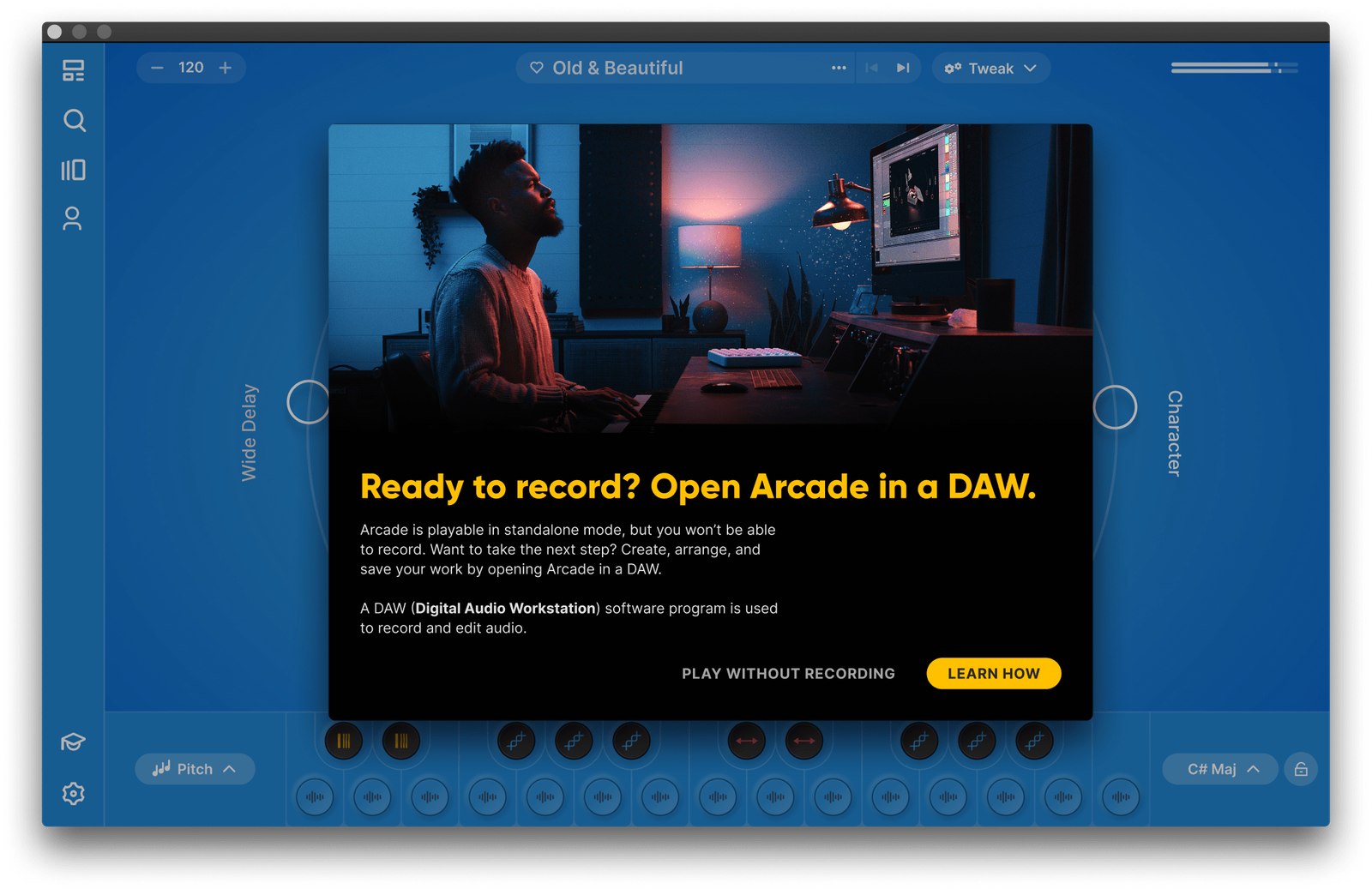
The in-product modal is currently in-flight and so precise metrics are difficult to pin down. However, we are trending towards a statistically significant 5% bump in 30-day trial conversion as well as a 10% rise in DAW sessions for users in the treatment group of this A/B test.
Looking for more than a highly abbreviated case study?
Thanks for reading this far. Let's dig in deeper.
Get in touchMore work
App Launch Animation
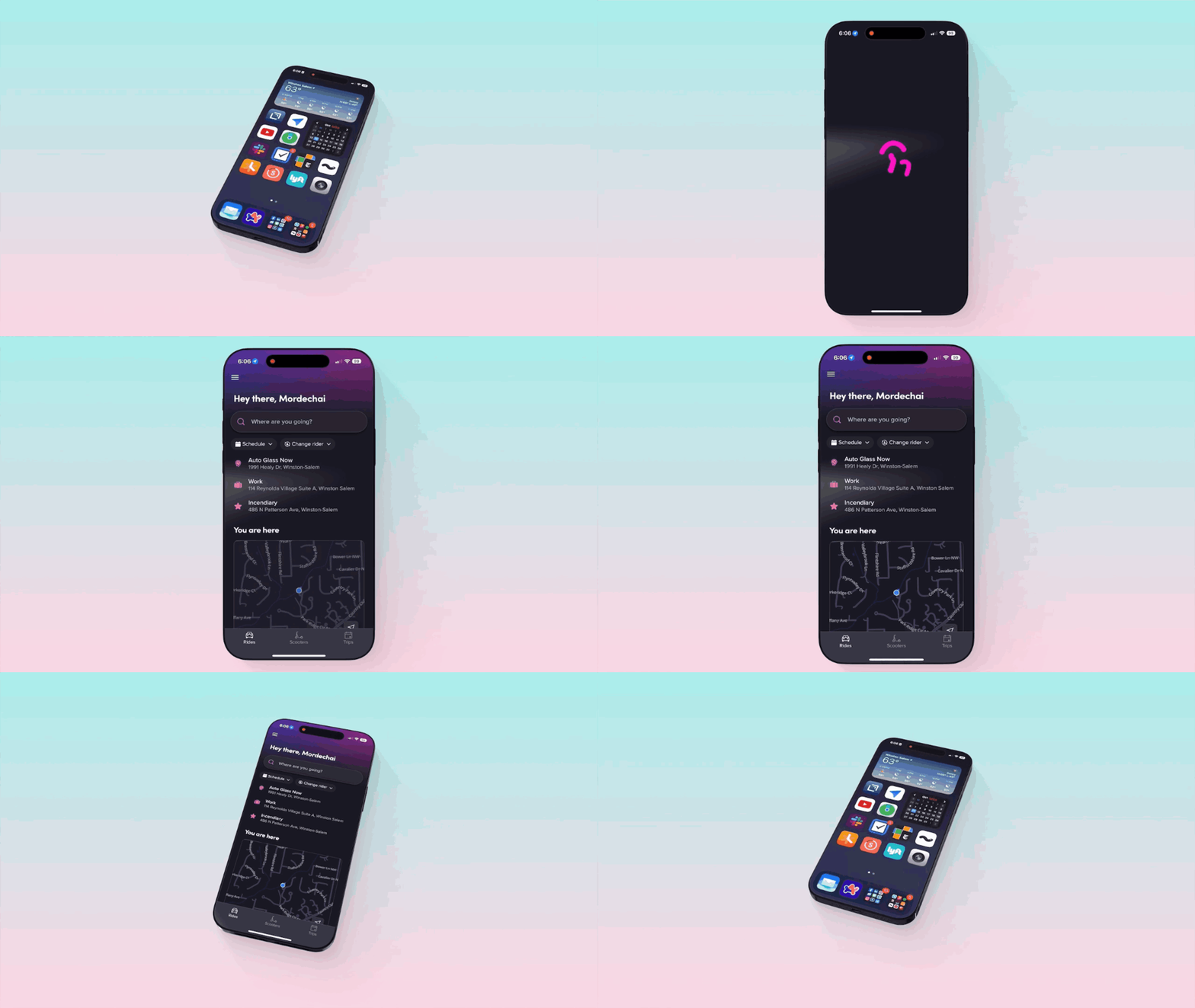
TLDR: In four weeks, I defined the scope, creative direction, and success metrics for a delightful app launch animation from an initially ambiguous request. I drove quick alignment across 10 stakeholders through daily comms, iterations, leading meetings and workshops.
Dev Mode Pilot
TLDR: I ran a large, cross-functional Dev Mode pilot at Lyft, demonstrating ~8k engineering hours / ~2.7k design hours saved per year. As a result, Dev Mode seats are now available to all front-end engineers at Lyft.